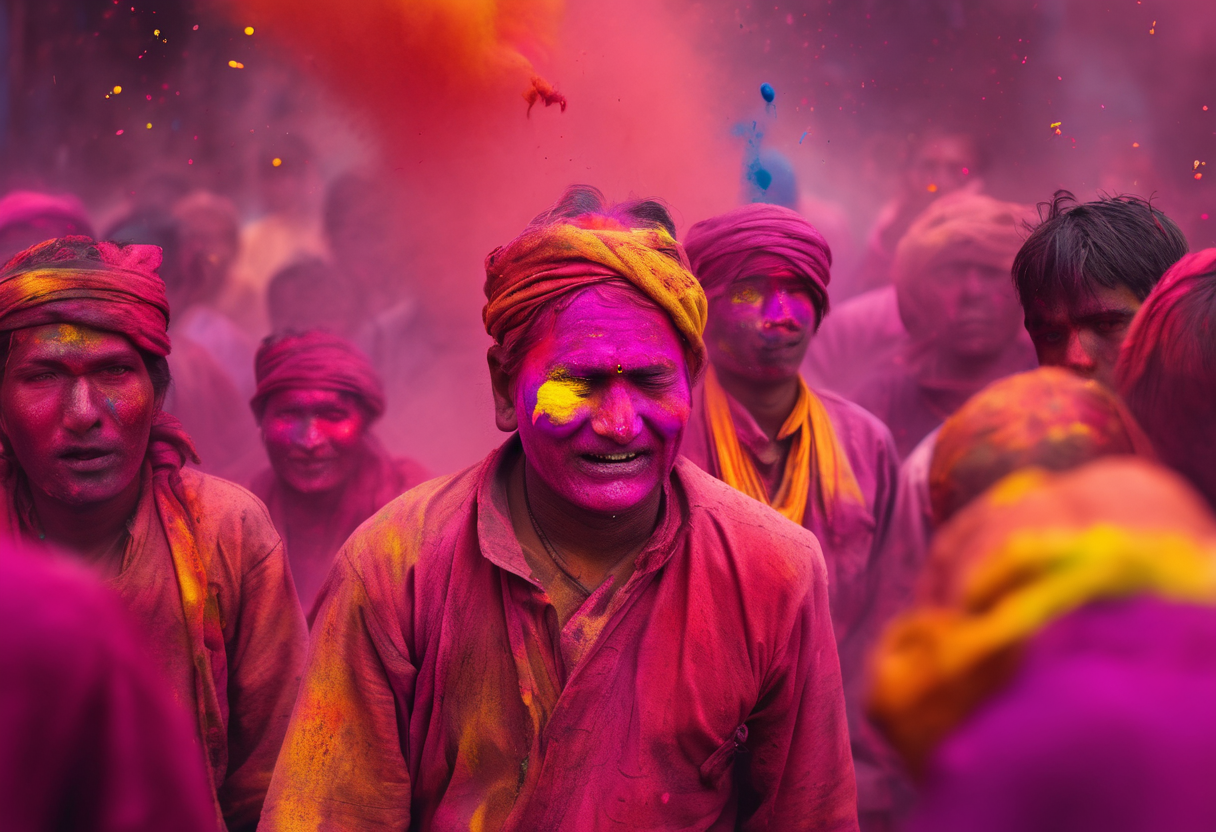
Holi, also known as the “festival of colors”, is a popular Hindu festival celebrated in Nepal and other parts of South Asia. It is a time when people come together to celebrate the triumph of good over evil and the arrival of spring. The festival is a fusion of ancient Hindu traditions and modern celebrations, making it a unique and vibrant experience.
In Nepal, the festivities begin days before the actual day of Holi. Many Nepalis prepare for the festival by cleaning and decorating their homes, as well as stocking up on colored powders, paints, and water guns to use during the celebrations. On the eve of Holi, a bonfire is lit to represent the burning of the demon Holika and the victory of good over evil. The next day, the streets of Nepal are filled with people dancing, singing, and chasing each other with colorful powders and water. It is a joyous and inclusive event where people of all ages, castes, and religions come together to celebrate.
The significance of Holi goes beyond just the colorful celebrations. It is a time to repair damaged relationships and connect with loved ones, as well as to forgive and forget any past grievances. Many families gather together to enjoy traditional Holi delicacies such as Gujiya, a sweet dumpling filled with khoya and dried fruits, and Thandai, a refreshing drink made with milk, nuts, and spices. The festival also includes traditional rituals such as offering prayers at temples and exchanging gifts with friends and family.
The Holi Festival in Nepal is more than just a colorful event, it is a time to honor and preserve traditional customs and rituals. It is a celebration of unity, love, and the beauty of diversity. So, why not add the joy and vibrancy of Holi to your travel bucket list and experience the cultural richness of Nepal firsthand?